Welcome to my education 100 blog

Saturday, November 22, 2008

Human Trafficking


How could we stop human trafficking??

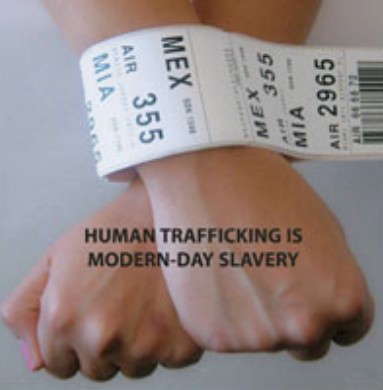
Human Trafficking also know as the sex slave trade is still a huge problem for millions of people (both male and female) across the world. There is an estimated 2 million women and children that are sold to the sex trade each year from around the world. Sex Trafficking is a form of modern day slavery of a person under the age of eighteen who are forced into sexual activity.

TUPA- stands for the Enactment of the Trafficking Victims Protection act of 2000. This act made sex trafficking a serious violation of federal law in the United States. But there are still girls being brought into the U.S at an alarming rate, but not as high as western Europe. The "Commercial Sex Act" States that any sex act where anything of value is given or received by any person is considered a violation.

Sex traffickers use phycological as well as the physical minipulation to force young people into submission. Victims of sex trafficking can be any gender any age but women and girls are the majority of the people being forced in the sex trafficking. Traffickers lure their victims in to sex trafficking by promiing good jobs in other countries, false ideas of marriage or being sold into the trade by parents, husbands or boyfriends or kidnapping.

Some of the various methods that sex traffickers use to condition their victims include rape, abuse, starvation, threats of violence to victims and their familes, these are just a few of the methods that sex traffickers use. The health risks that these victims face are things such as drug addition, physical injuries ( broken bones), suicide, STD's or forced aborations and many more.

Types of sex trafficking:
  • Prostitution
  • Pornography
  • Stripping
  • Live sex shows
  • Mail order brides
  • Military prostitution
The John Hopkins University has a project called " Protection Project". The Hopkins University is located inWashington D.C and is a researched based institute. This protection project is to promote human rights and values around the world. The research, train and exchange with people and other programsn throughtout the world. The goal for this project is to educate people and help in creating a global civil society. A place where people are safe from harm no matter where they live.


http://www.acf.hhs.gov
http://archives.cnn.com
http://www.protectionproject.org

Saturday, November 15, 2008

Charter schools


I picked Charter schools because I never really knew what they were about and wanted to know more. Charter schools are designed to challenge traditional public schools and create a system that the community needs. Charter schools are independent public schools supported by state funds but in some degree are not held to the same regulations. These schools are based on contracts between school organizations and sponsors like the board of education or universities. Organizations are in control of the hiring and firing and budgeting money. In exchange for allowing these schools to run they are expected to exceed the expectations of a typical public school when it comes to test scores and such. This is one debate about charter schools, that they are spending all this money and the kids will test the same or worse. I believe that we need to keep experimenting with different type of schools, so we can figure out what's best for the children

Since legislation began passing in 1990 three thousand new charter schools have opened. Charter schools teach their children reading, writing and arithmetic just like a normal public school but they are allowed to change the style of teaching if desired. They have more money to spend on programs in the art's such as music and drama, extensive art classes. This is a wonderful thing in a time where public schools only care about tests scores and are eliminating classes like art and so on. I am a firm believer that children need classes that expand their creativity not take them away.

Monday, November 3, 2008

Educational Philosophy


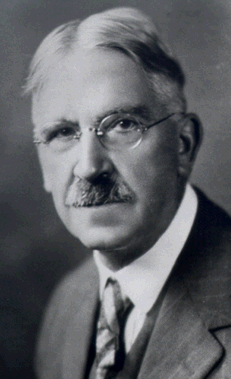
"Education is life itself". -John Dewey

John Dewey is the philosopher that I would align my own views with. John Dewey was born in 1859 and died in 1952. During his time he was looked at as one of the greatest educational thinkers of the 20th century. He was born in Burlington, Vermont and stayed there until he graduated from the University of Vermont then he received his PH.D from John Hopkins University. Dewey started his career at the University of Michigan where he taught for just about ten years. From Michigan he became a chairman in the department of Philosophy for the University of Chicago. He was then elected president of the American Psychological Association and the American Philosophical Association. Dewey taught for over twenty years at the University of Chicago. Dewey supported many social issues a few of them being Woman's suffrage, Progressive education, Educators rights, Humanistic Movements and world peace. He wrote many articles and such on these matters. Some of the writings in education that Dewey wrote were called Education and Democracy,The Child and Curriculum, Schools of To- Morrow, Art and Education. Some of the shorter articles are The teacher and Society, Education and social order. Dewey helped moved forward the "progressive education movement" and developed the " Experimental education programs", such as "Outward Bound"

(Outward Bound is a non-profit educational organization that serves people of all ages and backgrounds through active learning expeditions that inspire character development, self-discovery and service both in and out of the classroom. Outward Bound delivers wilderness-based programs to participants across the country and focuses its outreach on underserved youth. Customized courses provide curricula developed for struggling teens, groups with specific health, social or educational needs and business and professional organizations. Expeditionary Learning Schools Outward Bound offers a whole school reform model to more than 150 elementary and secondary schools throughout the country./www.outwardbound.org

Dewey's Philosophy on Education:
John Dewey believed that learning was active and schooling unnecessarily long and restrictive. Children come to school to do tings and live in a community which will give them real life guided experiences that would help them learn how to adapted and become contributing memebers of society. Real-life taks or challenges is how children should learn.

If we look back to chapters 14 nd 16 both of these school settings are putting their students in real life settings and guiding them in the right direction . I believe that John Dewey was the reason why schools such as The Met or Summerhill could run the way they do. I feel that THe Met school would be more up Dewey's ally though. Becuase he also beleive that education needed some sort of guidence.


I align my view with Dewey because I agree with him that learning should be active and the school days are too long and boring. I think that if their were more hands-on activities in school then the days would not feel so long. I think six hours is good but it's the dragged out lessons that kids are tuning out before they even begin. I feel that the education system is out of date and all the testing is stressing kids out. If they had a more relaxed setting with more activities they might want to come to school. They should feel that they are part of the classroom, not just little robots repeating the information that is given to them. I would like to of met him.

http://dewey.pragmatism.org/

http://www.wilderdom.com/experiential/

Monday, October 27, 2008

Is Active learning the way to go??


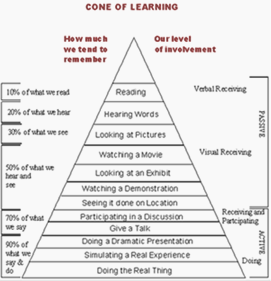
The article for social justice started to make me think about how I was going to change the banking system in my own classroom. I have always been a firm believer that justice is worth the fight if you believe what your fighting for. I believe that children are worth fighting for no matter what! Schools today are so concerned about what scores American kids get on the standardized tests. They put so much stress on these kids to do well on these standardized tests, that teachers today are just feeding the information into the minds of these young ones to pass these tests and not showing them what they are explaining. All of these children are memorizing word for word of what their teacher is saying. Are they actually learning? According to the Article that we had to read today's society and it's values are putting self interest and personal gain ahead of compassion and the communal good. I think that this is one of the problems with the educational system as a whole. A school is a community and children play a big part of that community. We need to make sure that it is a learning community not a memorizing community. I have been saying it over an over children learn with their senses. They also need to feel that they are all in this community together try to leave little room for feeling of left out. I was skimming parts of chapter 16 in Democracy and education by John Dewey and he states that education is suppose to promote independent, self motivated and critical thinking from these children. I do not believe that teachers standing in front of their students reading from their books is the best way to learn or achieve self motivated critical thinkers. We need to come up with projects for both individual and groups to learn the material. We need to show them what we are trying to teach. Let them feel what a pine tree feels like or actually create a constellation. Think about it, remember going to the museum of science and all the stuff that you got to touch and smell and jump on. It helped you learn about the lighting, animals and how the waves worked in the ocean. Not just a teacher telling you that's how it happens. We need to find ways to help them learn in the same way museums do on a smaller scale. I found this cone of learning on one of my searches and thought it fit perfect with what I was talking about.
http://www.ilt.columbia.edu/Publications/Projects/digitexts/dewey/d_e/chapter15.html

Tuesday, October 14, 2008

Where do we cross the line for what child makes it into typical classrooms?


Since we are reading about Inclusion I thought I would blog on it. Inclusion in the classroom is being pushed into typical classrooms at an alarming rate. This type of education involves rethinking the structure of the regular classroom setting. Which means that schools are going to need different types of resources. Resources like extra teachers in each classrooms, trained teachers in special education fields and medical equipment that a student might need. A typical child learns certain types of behaviors which are appropriate for classrooms settings, children with severe disabilities might not learn before their school career or be able to learn those types of behaviors in a regular classroom setting. Another concern I have about these types of classrooms is that they are over crowded as it is and the classes are just getting bigger. Now they want to add children that have all different types of disabilities. We need to carefully look at what is the best way to help all of these children typical kids included.


Don't get me wrong I am not an advocate for exclusion classroom settings I believe that children should be able to learn in the least restrictive environment, none of us like restrictions but some are necessary. I totally agree that some children would benefit from being in a regular classroom settings with typical children and typical behaviors. According to http://www.education-world.com feels that certain standards would make Inclusion easier to work out for everyone.
  • "adequate supports and services for the student,
  • well-designed individualized education programs,
  • professional development for all teachers involved, general and special educators alike;
  • time for teachers to plan, meet, create, and evaluate the students together;
  • reduced class size based on the severity of the student needs,
  • professional skill development in the areas of cooperative learning, peer tutoring, adaptive curriculum, varied learning styles, etc.,
  • collaboration between parents, teachers and administrators,
  • sufficient funding so that schools will be able to develop programs for students based on student need instead of the availability of funding, or lack thereof."


Last year during one of my field observations for my intro to special education class I saw a perfect example of Inclusion working the way it should. There was a child with one ear the was not formed all the way which he/she could not hear out of at all and the other ear was hard of hearing. The teacher would wear a microphone to amplify her voice and there was a speaker on the child's desk for the times that she was giving lectures.This piece of technology was perfect for it's purpose and the child was able to participate in a typical class. There was another class that I observed and one of the children was so autistic that his/her behavioral issues would keep him/her in a classroom that was totally sub-seperate until he graduated. This child was extremely bright but being in an inclusion classroom would do more harm then good. So I ask you where is the line drawn for children that should be put into inclusion classrooms and the ones that don not??? And how does it affect the over all picture?

Wednesday, October 8, 2008

How do we help At - Risk students....


Recently the chapter that we read talks about at risk students and programs that there is for them to succeed. The problem I find is that some of these kids want to take the help but the home environment might not support them. Unfortunetly children that do not finish their schooling have a higher rate of living in poverty for the rest of their lives. The sad thing is with out education they will never know that they don't have to stay in that class-status. That's the good thing about America, if you have a dream follow it. It's amazing what a human brain can do if it's put to the test.... According to the U. S Census Bureau the following conditions may contribute to different levels of At- Risk.
  • Has at least one disabiltiy
  • Retained in a grade at least once
  • Speaks English less than "very well"
  • Does not live with both parents
  • Either parents emigrated in the past five years
  • has a family income below $ 10,000
  • Neither parent or guardian employed
At- Risk students can have all or none of these factors they just serve as a guideline for educators. There are also children that have one or two of these conditions and be the exeption to the rule and succeed above and beyond. I feel that as educators we need to really look and interact with these children before we start to label them. There are federal funded programs that have been created to help these children such as
  1. Upward Bound
  2. Pull out programs
  3. Compensatory education program
There are also mentoring programs for children that don't have the right adult to look up to. Programs like Big brother or big sisters that give one -on-one attention to these children that need the help. Another way for these kids to succeed in school would be parents getting involved but that doesn't always happen, Programs for parents to get involved are as follow
  1. PTA
  2. PTO
  3. Parent teacher conference
  4. Open house
I understand that there are more At-Risk students then there are educators. There has to be a way for us to help our youth......

Monday, October 6, 2008

Shoule there be art in schools??


I feel that there should totally be art in schools. I was observing a class over the past week and I noticed that there was not many pictures or projects that the kids created them selves, like during an arts and crafts class or a time where they could create. The response that I got was 1. we don't have enough time during the days to give creative time and 2. there are many cut backs and those are the types of courses that are the first to go. I know that I am artist kind of person when I have the time and is it wasn't for my art classes I would of had a harder time in school. We still learned while we were in art class, it just was not in a test book. Art was just a different way to learn. Art helps communication skills and will help later on in life. It said that art was important in the curriculum but it's the first one to go when the budget gets tight. Then I thought about spending regular class time for creative thinking or drawing, coloring whatever but when I talked one of my teachers that I was observing I quickly found out that there's not room there either. I was told that with all the standardized testing there is no time for arts and crafts. They have certain curriculum to follow to make sure these kids stay on track . This for me is getting out of hand. There has to be a way to mix learning and art into one course. A course where they can draw, paint and sculpt and still learning the curriculum.

Studies over the past several years have found that the arts – whether as part of the curriculum or as supplemental programs – can have the following benefits:
  • Reach, and increase the performance of, students who often struggle to succeed in school, including disadvantaged students, English language learners and students with disabilities

  • Provide new challenges for those students already considered successful

  • Reduce recidivism rates of incarcerated youth while strengthening their job skills and self-esteem

  • Improve cognitive skills involved in reading, language development and mathematics; and develop problem solving and critical and creative thinking skills – all of which serve students in school and in the workplace

  • Motivate students to learn and become more involved in their schools

  • Increase student attendance and engagement

  • Promote students’ self-confidence and foster better relationships among students and teachers

  • Nurture the curiosity and creativity of students.
http://www.ecs.org/html/issue.asp?issueid=211&subissueID=0